The Effort of It: The Undoing of Appearance in Di Piero’s “St Hubie’s Altar”
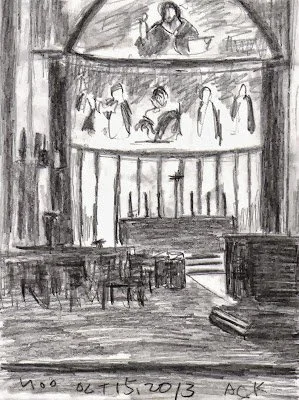
Di Piero’s poems, oftentimes conversational and intimate in nature, share a common thread: that is, to reveal the intensity of urban life. St Hubie’s Altar is an excellent example of this. The 28 line poem follows a sixteen year old teenage girl, constructing her exterior image as a self-obsessed, fastidious girl who makes a conscious effort to appear pretty – yet, subverts this idea as the poem progresses.
Di Piero characterises the unnamed girl in the very first line of the poem. He writes, “the effort of it, the Egyptian / teenage-princess look”, foregrounding the endeavour of the girl’s diligence to achieve such a “look”. The diction of “Egyptian” accentuates the uniqueness of her appearance in two ways: firstly, Egyptian beauty in antiquity focused on enhancing one’s features through heavy cosmetics. Di Piero's intent, therefore, is evident in bringing across the idea of the application of dramatic, roguish aesthetics. Secondly, in likening her image to that of a long-lost civilization, Di Piero further exemplifies the extent of her distinctiveness, such that it evokes the appearance of a glorious, forgotten empire. Lines 3 - 11 contribute to this idea through the use of descriptive imagery. The alliteration of “crushed cinnabar blush” and “brown lip liner” (the repetition of c and l) draw greater attention to the makeup the girl has on, again allowing the reader to construct an image of this girl in their minds.
In lines 8 - 10, Di Piero returns to, and underlines again the effort the girl puts into her outward appearance as he did in the very beginning of the poem. He talks about the “many modeling classes” she takes, or took, “to craft a seeable self”, suggesting that before these extracurriculars, she was unseen, invisible, unknown. I read this with connotations of an embodied insecurity and self-doubt within the poem’s subject: only with numerous repetitions of instruction to make her like a “model”, she is only then able to “see” herself as beautiful or deserving of self-respect. A macabre reading, but one that would be congruous with Di Piero’s poetic focus in analysing the problems of modern society. The line “pencil skirt at sixteen” darkens the poem further. Although not inherently suggestive, Di Piero suggests that a pencil skirt that hugs the figure can be seen as an inappropriate piece of attire at such a young age. This raises questions in the reader’s minds: is she attempting to look more mature for her age, and if so for what reasons? If aligning with the details of the earlier sections of the poem, a possible interpretation would thus be for the purposes of her obsession with constructing a beautiful, presentable appearance.
However, Di Piero subverts this shallow, self-obsessed characterization from line 13 to the end of the poem through introducing readers to a different side of her personality. The poem takes on a morbid tone when it is revealed that she is at a funeral - she trips over “the casket’s red carpet”. Another hint that makes this clear after reading this line is the poem's title, “At St Hubie’s Altar”. Here, the inner qualities of the girl are revealed. She “never listened to nobody and acted like she owned the world” – she is defiant, resolute, and tenacious in nature. Furthermore, she faces an inner struggle: she’s caught between wanting to “fall inside and be with that blanched life” of her aunts and her current intransigent self. To rebel is to be outside of the status quo, and as a result to possibly face alienation or estrangement. The opposite of a “blanched life” – that is, a listless and mundane existence – is a vibrant, exciting life, the life she is living now. The question, then, is whether surrendering that vibrancy is a cost she is willing to bear. Di Piero seems to posit the question: is she really just a girl concerned about appearances? Or rather, a nuanced and complex character in spirit and faith.
Finally, Di Piero writes: how she must “hate that visage / in her vanity mirror / the silly earnest child, face banged up by tears, who can’t even help herself / who drools and bites her hair”. Why does she “hate” her visage? The most likely answer is that a loved one of hers has passed, and she is at their funeral. With this line, her “teenage-princess look” is stripped away. Grief, in her ability to revert us to our basest of emotions, transposes the composed adolescent into that of her childhood self. Not a fastidious teen, but an empty, raw, vessel of sadness.
A fascinating and introspective read.
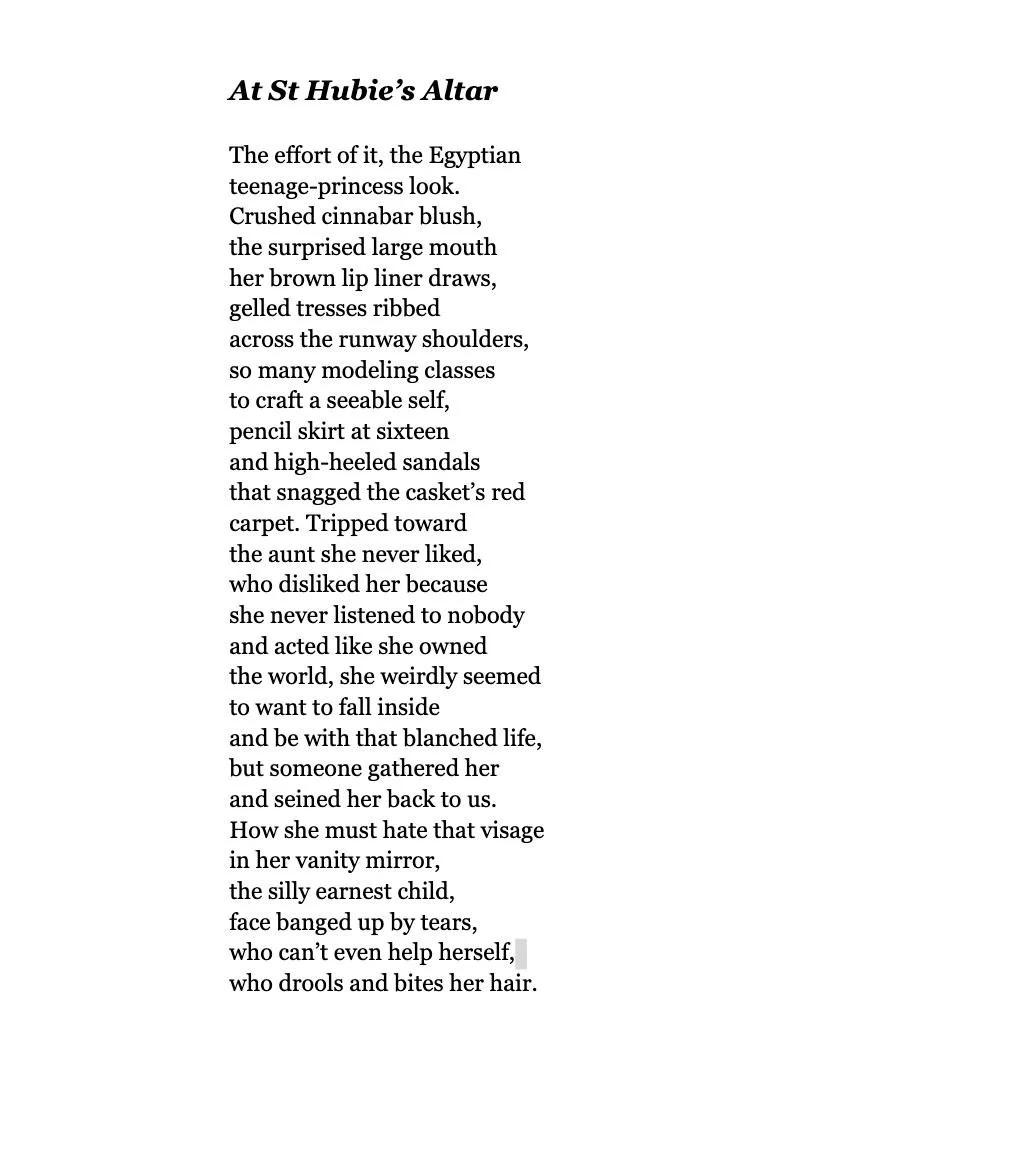
At St Hubie’s Altar by W.S. Di Piero, from his 2001 poetry collection Skirts and Slacks.